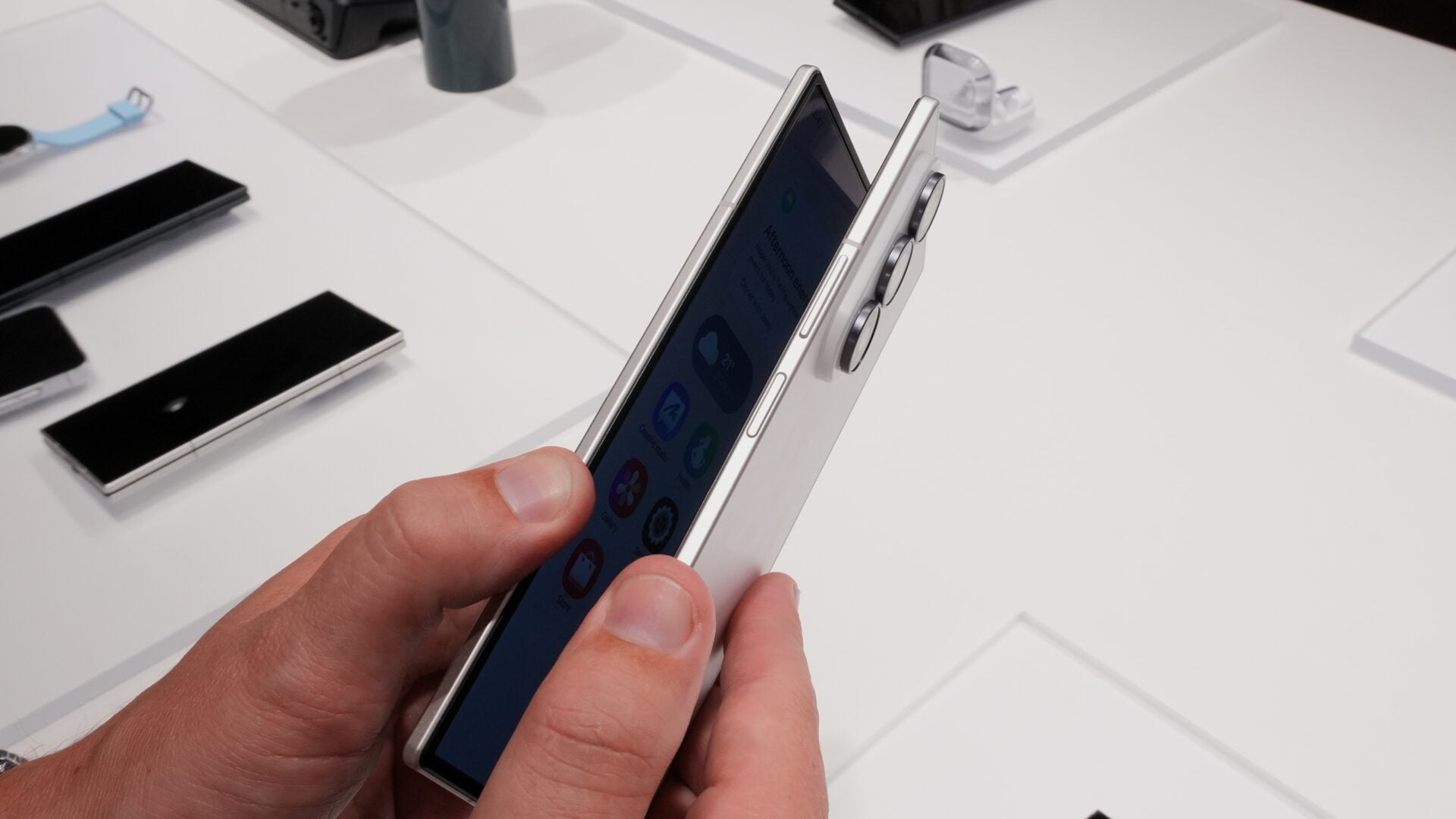

The Galaxy Z Fold 8 Ultra is Samsung's most capable foldable smartphone since the lineup's inception in 2019. It builds on the Galaxy Z Fold 7 with a more powerful camera setup, brighter screens, improved performance, longer battery life, and faster charging.
Let us see how the Galaxy Z Fold 8 Ultra compares with the Galaxy Z Fold 7.
Design
The Galaxy Z Fold 8 Ultra uses the same overall design as its predecessor, featuring Advanced Armor Aluminum and an IP48 rating for dust and water resistance. However, it now uses Gorilla Glass Ceramic 3 to make the cover screen more durable.
The phone also uses the Flex Titanium hinge system, which makes the inner screen more durable and appear flatter. Both phones are rated to withstand at least 500,000 folds and unfolds.
Galaxy Z Fold 7
- Folded: 72.8 x 158.4 x 8.9mm
- Unfolded: 143.2 x 158.4 x 4.1mm
- Weight: 215g
- Hinge: 500,000 folds and unfolds
Galaxy Z Fold 8 Ultra
- Folded: 72.8 x 158.4 x 8.9mm
- Unfolded: 143.2 x 158.4 x 4.1mm
- Weight: 215g
- Hinge: 500,000 folds and unfolds


Display
Both phones have a 6.5-inch cover display and an 8-inch foldable inner display. However, the Galaxy Z Fold 8 Ultra's inner display has a higher resolution of 2,504 x 2,256 pixels, compared to the Galaxy Z Fold 7's inner display resolution of 2,184 x 1,968 pixels.
This makes the Galaxy Z Fold 8 Ultra's inner display resolution over 31% higher, resulting in sharper visuals.
Both screens on the Galaxy Z Fold 8 Ultra can reach up to 3,000 nits of peak brightness. This makes them 15% brighter than the Galaxy Z Fold 7's screens, which can reach 2,600 nits of peak brightness.
The rest of the specifications, including a variable refresh rate from 1Hz to 120Hz and HDR10+ support, remain the same.
The new Flex Titanium hinge on the Galaxy Z Fold 8 Ultra makes the screen crease less visible, while its anti-reflective coating reduces glare and reflections by up to 50%.
Cameras
The Galaxy Z Fold 8 Ultra features a 50MP ultrawide camera, the same camera used in the Galaxy S26 Ultra. It uses a 1/2.5-inch sensor with an F1.9 aperture and autofocus, and it can record 8K 30fps videos.
In comparison, the Galaxy Z Fold 7 uses a 12MP ultrawide camera with a fixed-focus lens and tops out at 4K 60fps video recording.
Thanks to a faster processor, the Galaxy Z Fold 8 Ultra can capture 200MP still images with HDR processing using its primary camera. The Galaxy Z Fold 7 cannot do that. The Fold 8 Ultra also supports Samsung's APV codec, which preserves detail in videos even after multiple rounds of editing.
The remaining cameras are the same on both phones, including a 200MP primary camera with OIS, a 10MP telephoto camera with OIS, and two 10MP front-facing cameras (one of which has a wider field of view).
All cameras on both phones support up to 4K 60fps video recording with Super HDR processing and 8K 30 fps recording.
Hardware specifications
The Galaxy Z Fold 8 Ultra uses the Snapdragon 8 Elite Gen 5 for Galaxy processor, while the Galaxy Z Fold 7 comes equipped with the Snapdragon 8 Elite for Galaxy processor.
Both phones have 12GB or 16GB of RAM and 256GB, 512GB, or 1TB of storage. As you would expect, the new chip brings improvements in CPU and GPU performance and is more efficient.
Both phones have GPS, 5G, LTE, 3G, 2G, Wi-Fi 7, UWB, NFC, and a USB 3.2 Type-C port. The Galaxy Z Fold 7 uses Bluetooth 5.4, while the Galaxy Z Fold 8 Ultra has Bluetooth 6.0.
Battery and charging

Samsung has increased the Galaxy Z Fold 8 Ultra's battery capacity to 5,000mAh without increasing its thickness or weight by using silicon-carbon anode batteries. It supports 45W fast wired charging and 20W fast wireless charging.
In comparison, the Galaxy Z Fold 7 is powered by a 4,400mAh battery that supports 25W fast wired charging and 15W wireless charging.
Software and updates
The Galaxy Z Fold 8 Ultra runs Android 17 and One UI 9.0 out of the box. It will receive seven generations of Android updates and security patches for up to seven years.

The Galaxy Z Fold 7 launched with Android 16 and One UI 8.0 preinstalled. It also came with a promise of seven generations of Android updates and security patches for seven years.
So, should you upgrade?
For the first time in years, a new Galaxy Z Fold phone looks like a substantial improvement. It has brighter screens, a less visible crease, faster performance, improved cameras, longer battery life, and faster wired and wireless charging.
There's enough on offer here that even Galaxy Z Fold 7 users could consider upgrading. That's unless they want the most complete camera experience Samsung to offer, in which case we would recommend waiting another year to see whether Samsung brings an upgraded telephoto camera with the Galaxy Z Fold 9 Ultra in 2027.


Post a Comment